
GTCC and Cone Health: A Model Partnership in Cardiac Telemetry Training
Published on: March 30, 2026
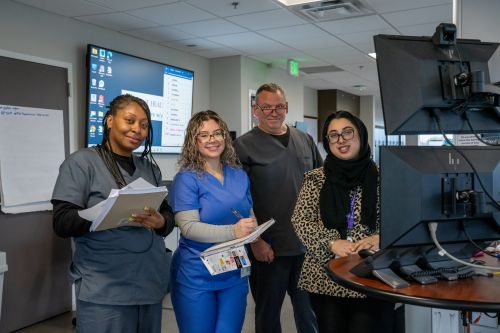
In the world of healthcare, some opportunities fly under the radar — until their impact becomes impossible to ignore.
The EKG Cardiac Telemetry Technician Training Program at Guilford Technical Community College is one such opportunity. The program has been described as the “best kept secret for an up-and-coming healthcare career” by Carlos Samayoa, a GTCC faculty member who teaches in the program .
Through a close partnership with Cone Health, the program equips students with the skills, experience, and connections needed to launch a career in cardiac monitoring. Electrocardiogram (ECG or EKG) technicians operate specialized medical equipment to obtain diagnostic cardiac information for physicians.
In 2016, Jennifer Watkins, Cone Health nurse manager for the systemwide Centralized Cardiac Monitoring Department, reached out to GTCC for help in filling critical roles for the hospital system.
“I had visited another health system to look at their monitoring department and speaking with a leader there, they mentioned they had a program at their community college for monitor techs,” said Watkins. “At the time, it was really a struggle to get qualified people for these positions, and I thought this would be a great opportunity.”
She contacted GTCC and together, Cone Health and the college collaborated to create the curriculum.
“The program is GTCC’s not Cone’s, but Cone Health supports the program by allowing the students to do their clinical hours here in our centralized monitoring department,” said Watkins.
At GTCC, you can complete the EKG training program in just seven weeks. Students cover cardiac anatomy and physiology, heart disease, pacemakers, medical terminology, and ethics. In addition, students gain hands-on practical training in the operation and maintenance of EKG equipment and participate in clinicals (hands-on training).
Most EKG technicians have full-time positions in hospitals. They can also work in doctors' offices, medical labs, and clinics.
At Cone Health, where all GTCC students complete their clinical hours, there is a control room-type environment that monitors hundreds of patients across the healthcare system. This partnership provides critical, hands-on experience for GTCC students.
“Cone Health is leading the charge in cardiac monitoring,” said Samayoa. “The nurse who is physically with the patient is monitoring and then a cardiac tech is also watching the patient 24/7. There is always someone there watching the patient’s monitor while the nurse is making in-person rounds.”
Samayoa says there is a higher success rate in securing a job right after graduation because the GTCC program prepares students so well for each facility’s entry level test that students must pass before they are hired.
“Students can also take a national certification which can go to any state. This is something extra they can decide to do on their own but will make them more marketable,” he adds.
Not only are former students finding quick placement in the community, two GTCC graduates from the EKG Cardiac Telemetry Technician Training Program, Patrick Whitsell and Siram Ali, are working full time at Cone Health while teaching classes for GTCC.
“A lot of the students enjoy having the same folks from class to clinicals and it helps their knowledge by being able to put things into practice making everything seamless. That’s why I think we’ve had such success with job placement because of the immersion in clinicals at Cone Health Central Cardiac.”
And thanks to GTCC, Cone Health has a pipeline of candidates, along with other medical facilities in the Triad and beyond.
“Without the program at GTCC, I would never have been able to fill the number of tech positions I’ve filled,” she shared.
“I’ve hired six students just in the past three to four months. I never would have been able to find six techs with the proper qualifications to fill these positions without GTCC.”
Watkins has some advice for folks considering the GTCC EKG Cardiac Telemetry Technician Training Program who may be a little unsure whether healthcare is the right career path for them.
“Some people have an interest in health care but aren’t interested in direct patient care. The cardiac monitor techs play a critical role in supporting those providing direct patient care. The other great thing about this role is that they’re working independently but never alone. There are always people there with many years of experience to help cover you and answer questions.”
Learn more about the GTCC EKG Cardiac Telemetry Technician Training Program.
Back to All Articles