
Stellar Society Lecture
Stellar Society Lecture on February 20
Each year, typically in April, GTCCs student astronomy club – the Stellar Society – teams up with Cline Observatory and the GTCC Foundation to present the Stellar Society Lecture. The event features an astronomer from a regional institution who gives a free public lecture on a Friday night before our regular public viewing.
The 2026 Stellar Society Lecture will be at 7 p.m. Friday, February 20, 2027 in the Auditorium of Koury Hospitality Careers Center, Building 19 on the Jamestown campus map (621 E. Main St., Jamestown, NC 27282).
The End of Science as We Know It: Lessons for Today from the Scientific Revolution and the Industrial Revolution presented by Dr Anthony Crider, Elon University
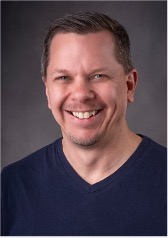 About the Talk: STEM careers have long been associated with high pay, intellectual prestige, and social authority. Paradoxically, many of the tools now poised to disrupt or eliminate those careers were created by STEM researchers themselves. As artificial intelligence approaches and, in some ways, surpasses human intelligence, how will the nature of scientific research change, and what human skills, if any, will remain essential in that process? At the same time, public trust in expertise and higher education appears to be eroding. If scientific facts are increasingly greeted with skepticism or outright dismissal, can science continue to meaningfully shape society? To explore these questions, this talk looks backward as much as forward. We examine the trial of Galileo as a case study in how societies respond when new knowledge threatens existing power structures. We then turn to the craftsmen of Manchester in the 1800s, whose innovations sparked the Industrial Revolution while simultaneously undermining traditional forms of skilled labor. Together, these moments illuminate patterns that may help us understand the revolution we are living through now, and the uncertain future of STEM itself.
About the Speaker: Tony Crider is a Professor of Astrophysics at Elon University in North Carolina. He received his Ph.D. in space physics and astronomy from Rice University in 1999 and continued his research of gamma-ray bursts as a National Research Council associate at the Naval Research Laboratory. Before moving to Elon, Dr. Crider taught at American University where he coordinated the Multimedia Design and Development program. His interest in science visualization led him to create virtual planetariums, telescopes, and lunar landscapes within the 3D online world of Second Life. In 2006, he co-founded the SciLands, an archipelago of Second Life islands dedicated to science education and outreach. Shortly after that, he began using Reacting to the Past role-playing games in his astronomy classes and subsequently invented the chapter-length reacting game. His own game, The Pluto Debate: The International Union Defines a Planet was the first of many science reacting games to receive funding from the National Science Foundation. Dr. Crider has written on visual literacy in astronomy, the morphologies of active galaxies seen with the Sloan Digital Sky Survey, and "Epic Finales" in higher education. In recent years, he has taught classes on astrophysics, virtual reality, technological revolutions, and the pageantry of protests.
PAST SPEAKERS
2025: Madyson Barber, UNC-Chapel Hill, "Discovering Infant Exoplanets," | View Recorded Presentation
2024: Dan Caton, Appalachian State University, "Defending Dark Starry Skies: Battles with LEDs on the Ground and Satellite Constellations Above” | View Recorded Presentation
2023: Barbara Becker, University of California-Irvine, Retired, "Risky Business: Searching for the Soul of the Sun in the Shadow of the Moon" | View Recorded Presentation
2022: Paul Byrne, Washington University in St. Louis, "(Some) New Insights into the Geology of Venus" | View Recorded Presentation
2021: Ilse Cleeves, University of Virginia, "Planetary Origins: At Home and Abroad" | View Recorded Presentation
2020: Event canceled because of the COVID-19 pandemic
2019: Alicia Aarnio, UNC-Greensboro, "Our Sun: Then, Now, and What Might Be"
2018: Katherine J. Mack, North Carolina State University, "Dispatches from a Dark Universe"
2017: Stephen P. Reynolds, North Carolina State University, "Supernovae and You: Tracking Stellar Explosions through Their Remnants"
2016: Sarah Hörst, Johns Hopkins University, "Titan: Ingredients for Life"
2015: Michael Solontoi, Lynchburg College, "Killer Death Rocks from Outer Space!"
2014: Jay Pasachoff, Williams College, "Transits of Venus: Science and History"
2013: Stacy Palen, Weber State University, "The Life & Death of Stars"
2012: Enrique Gomez, Western Carolina University, "What is it about 2012? How We Misunderstand Ancient Maya Astronomy."
2011: Brad Newton Barlow, UNC-Chapel Hill, "Searching for Planets Using Pulsating Stars"
2010: Anne Verbiscer, University of Virginia, "Cassini’s Exploration of Enceladus, Saturn’s Active Icy Moon"